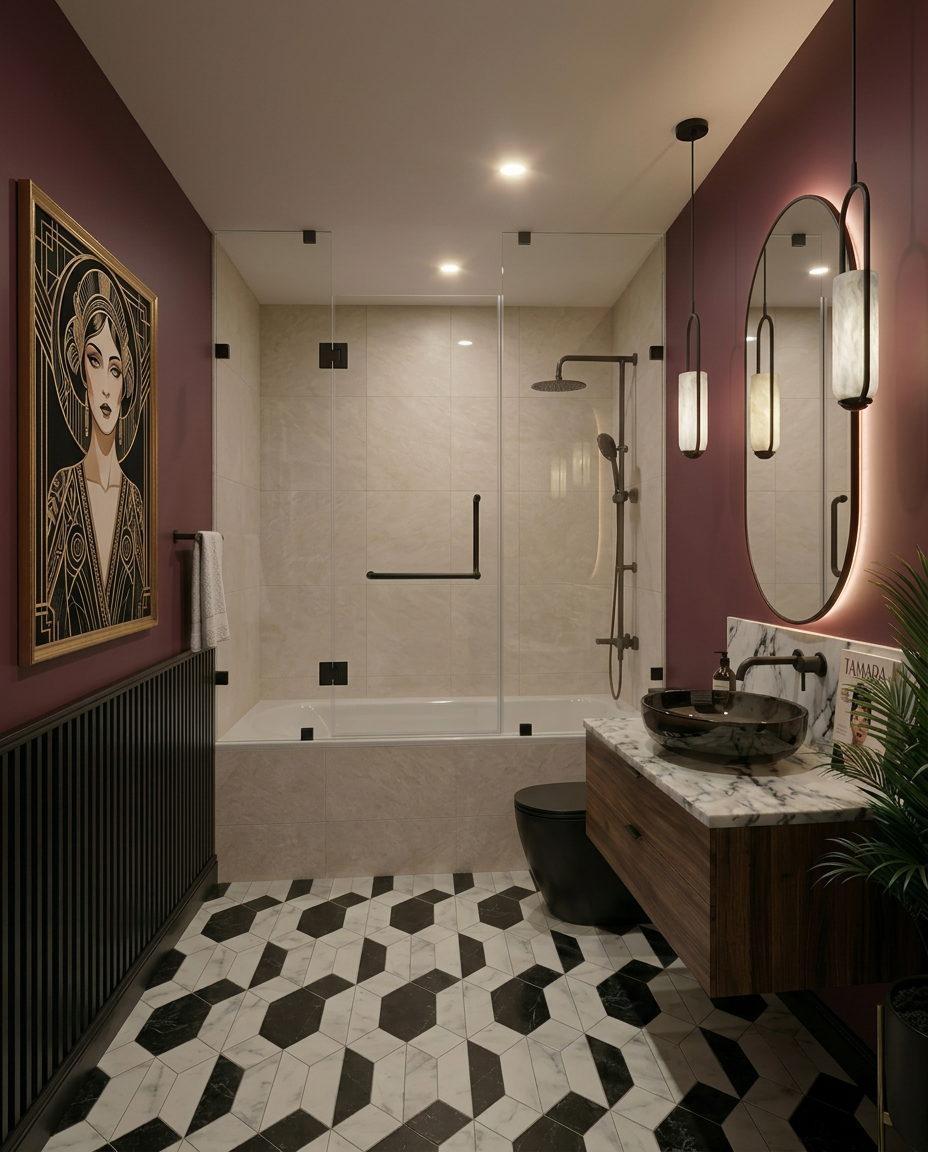
In Canada and across North America, interior design remains one of the most misunderstood professions in the built environment.
For many homeowners and business owners, the term interior designer still suggests choosing paint colours, matching furniture, or styling a space at the end of a project. While these elements may be visible, they represent only a small portion of what professional interior designers actually do.
Interior design is not decoration. It is a technical, regulated, and systems-based profession that directly affects how buildings function, comply with codes, and support human health, safety, and welfare (Council for Interior Design Accreditation [CIDA], 2020).
This misunderstanding has real consequences. When interior designers are excluded from the early stages of renovation or construction, projects often suffer from inefficient layouts, costly revisions, coordination conflicts, and long-term functional problems that could have been avoided.
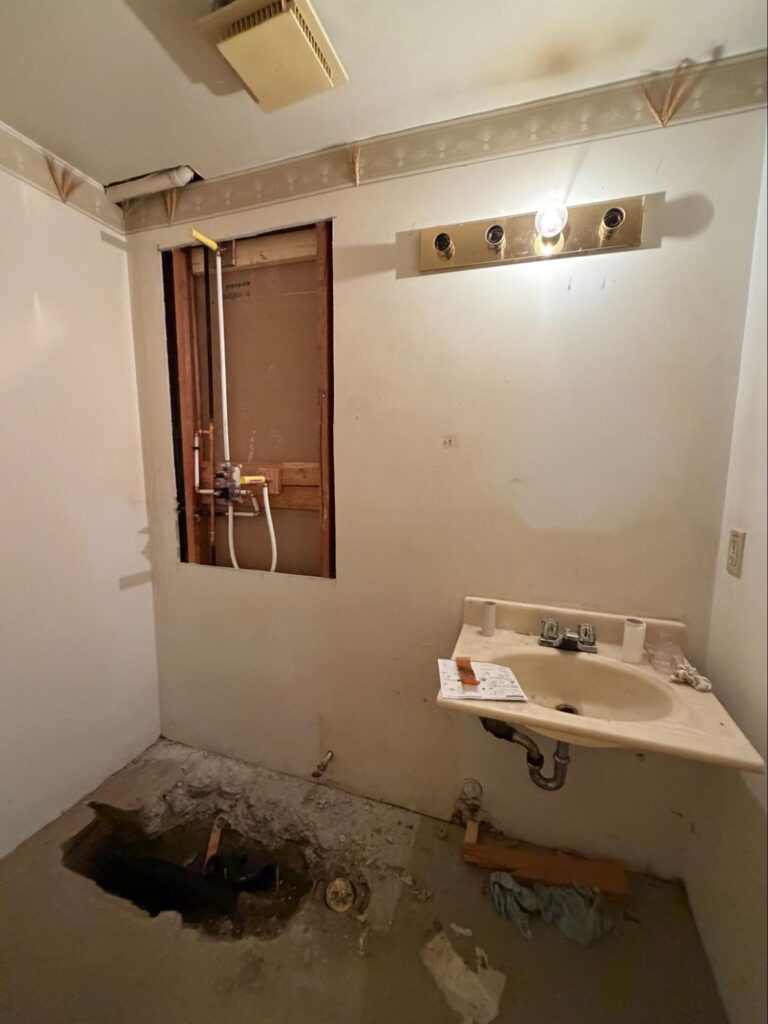
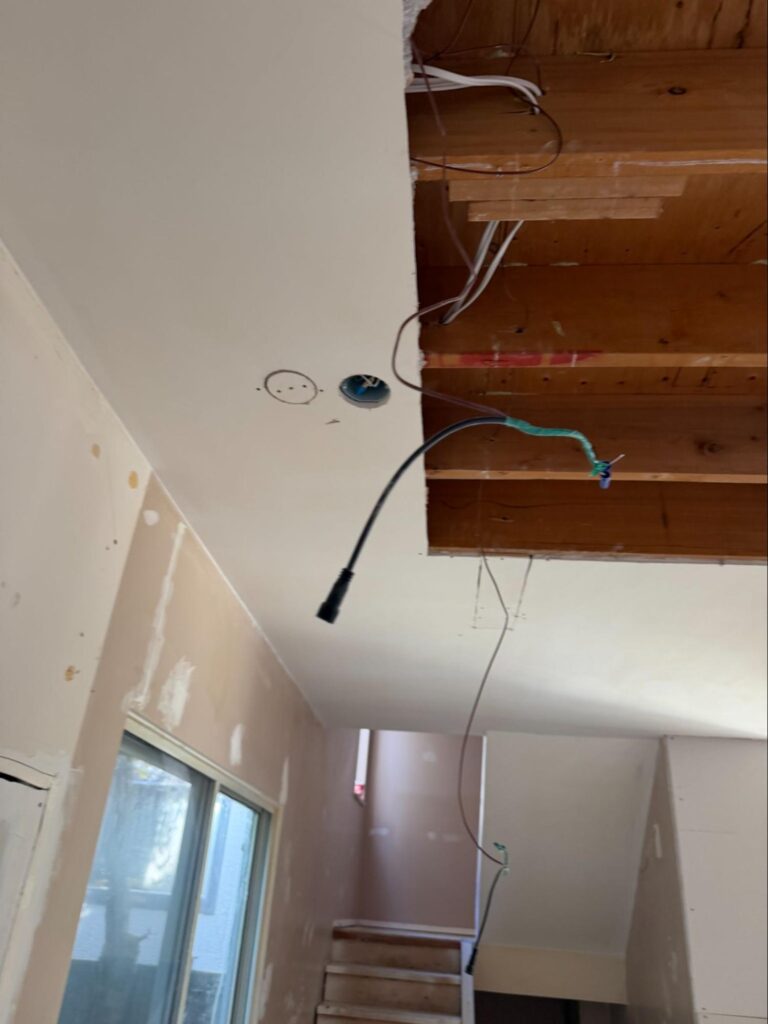
We were onboard after the contractor was hired, and contractor’s prices keep changing as client wanted our design to be implemented, and the contractor had a fixed fee contract, and it could be a way better collaboration if we were onboard way earlier
Interior Designers Design How Buildings Work from the Inside Out
Professional interior designers are educated and trained as part of the broader building industry. In North America, interior design education is accredited by the Council for Interior Design Accreditation (CIDA), which establishes the academic and professional standards for the discipline.
CIDA defines interior design as a profession that integrates technical knowledge, building systems, codes, and human-centred design to protect the health, safety, and welfare of the public (CIDA, 2020). This definition clearly positions interior design as a technical discipline—not a decorative service.
As a result, CIDA-accredited programs across Canada and the United States require rigorous education in space planning, programming, building codes, accessibility standards, fire and life safety systems, mechanical, electrical, and plumbing coordination, and construction documentation (CIDA, 2020).
Scholarly literature reinforces this distinction. Interior design historian John Pile describes interior design as the planning and organization of interior space to support function, safety, and human use, explicitly distinguishing it from interior decoration, which focuses primarily on surface aesthetics (Pile, 2007).
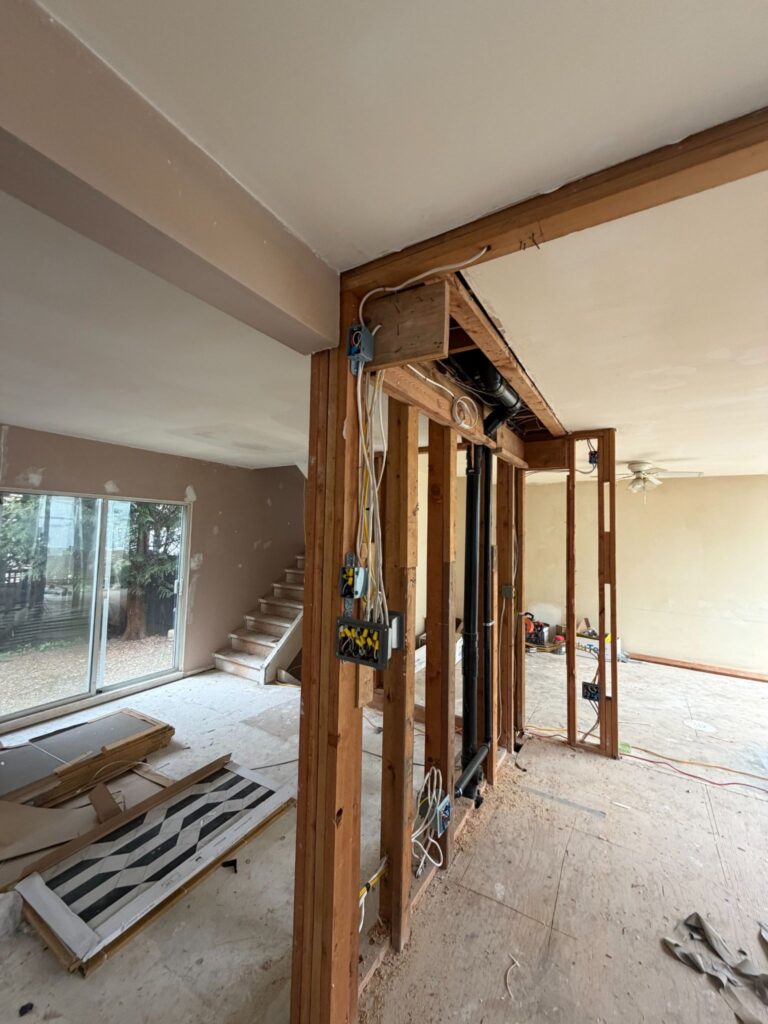
Site visit of our residential project in North Vancouver, where we found solutions for a few unexpected site constraints.
Why Interior Design Is a Regulated Profession
Interior design is regulated because interior environments have direct implications for public safety.
The National Council for Interior Design Qualification (NCIDQ) examination exists to evaluate interior designers’ competency in building systems, codes, life safety, and professional practice (National Council for Interior Design Qualification [NCIDQ], 2023). If interior design were limited to decoration or styling, such qualification and testing would not be necessary.
In Canada, professional organizations such as the Interior Designers of Canada further define interior designers as integral contributors to the built environment, working alongside architects, engineers, and other technical consultants to ensure regulatory compliance and functional performance (Interior Designers of Canada [IDC], 2022).
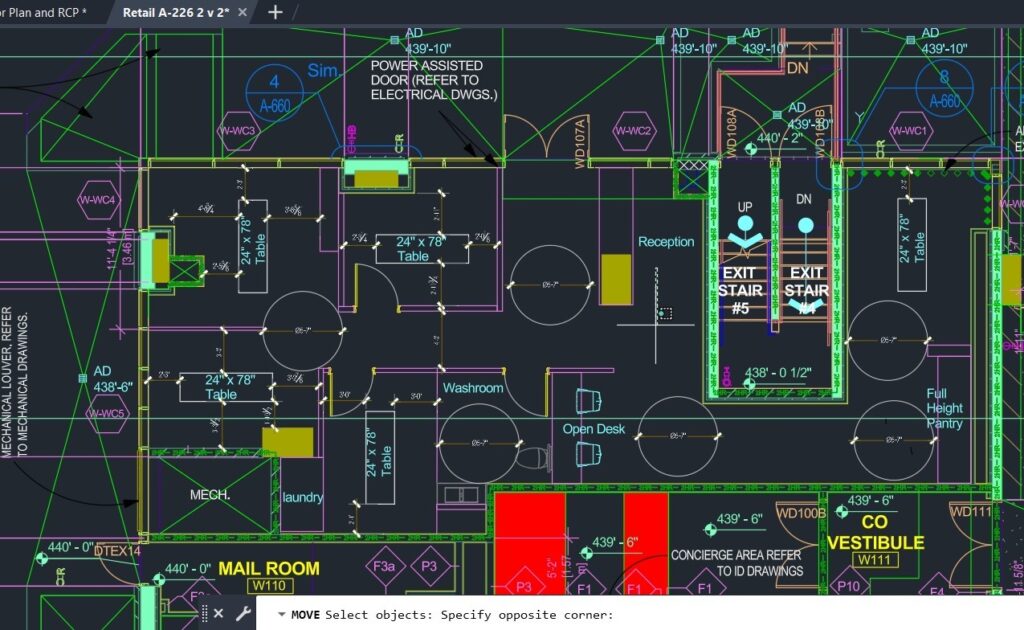
Feasibility Study for our Chiropractitioner client before they lease the new clinic, they wanted to have six treatment rooms, 1 staff room, one office, and after a quick code review, we advised them not to lease this space as it will not fit into their requirement. So they saved time, money, energy and joy for a new business place to move forward.
Contractors Build — Designers Design
A common misconception in renovation and construction projects is the belief that contractors can “design as they go.”
Contractors are experts in construction execution, sequencing, and trade coordination. However, design literature consistently differentiates construction expertise from spatial problem-solving and design synthesis. Interior designers are trained to resolve user needs, spatial relationships, and regulatory constraints before construction begins (Ching & Binggeli, 2018). Skipping this step is exactly why cutting corners on design ends up costing more down the line.
When interior designers are not involved early:
- Layout decisions are deferred until construction
- Systems are placed for convenience rather than performance
- Code conflicts are discovered too late
- Changes become expensive and disruptive
This is not a critique of contractors; it is a clarification of professional roles within the building process.
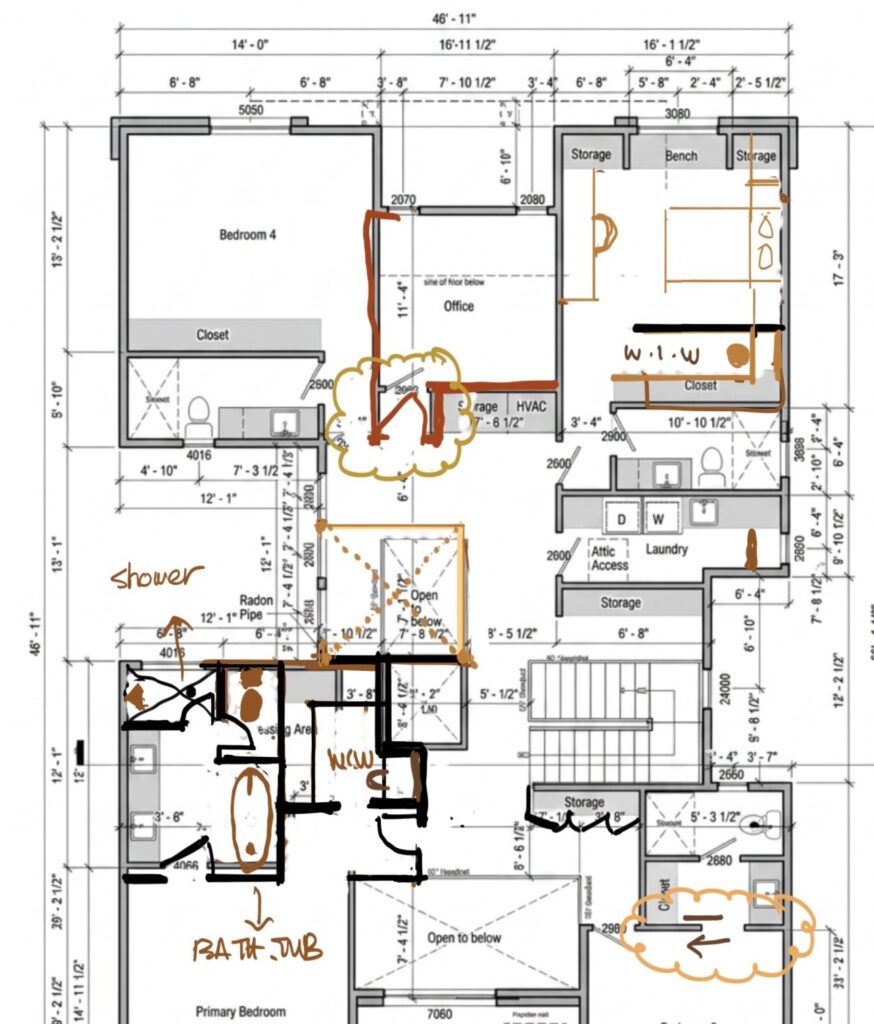
Client meeting space planning feedback, correcting what did not work from architect’s drawing
Why Interior Designers Must Be Involved Before Construction Begins
Hiring an interior designer early is not a luxury; it is a strategic investment. Research and professional practice show that early design involvement leads to better coordination, fewer revisions, improved budget control, and stronger long-term performance of interior environments (CIDA, 2020; IDC, 2022).
Interior designers translate human needs, business goals, and regulatory requirements into buildable, compliant, and efficient environments, reducing risk before construction begins.
Our full range of interior and exterior design services is built around getting involved at exactly this stage.
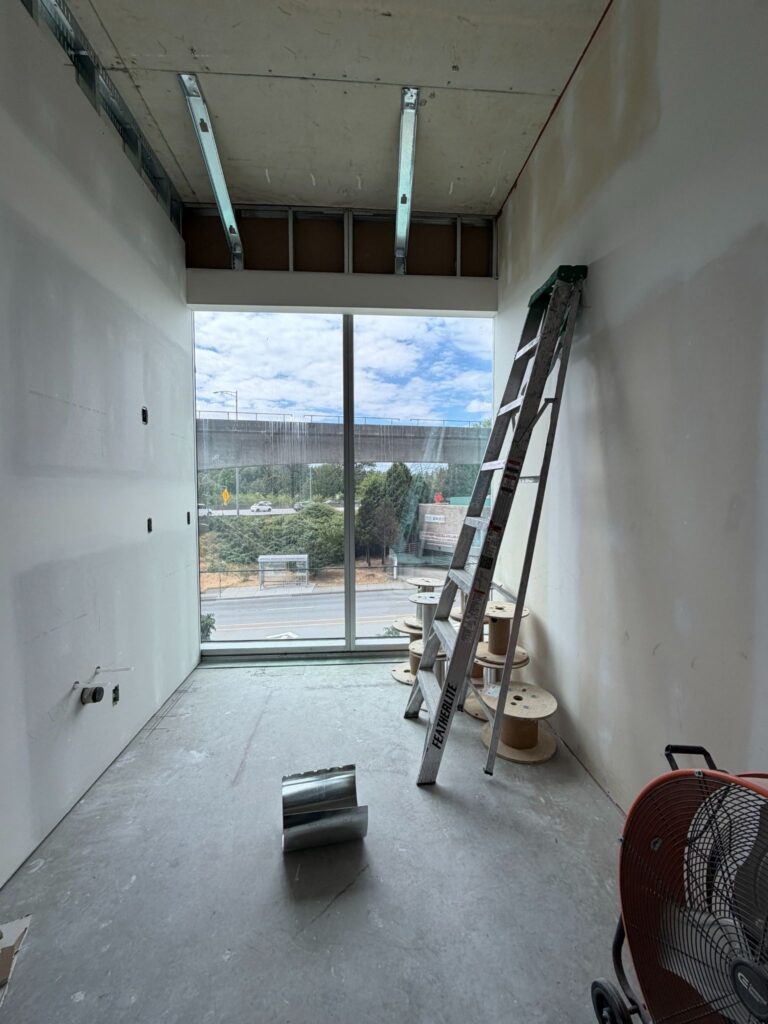
Another recent site visit for a Medical spa clinic, where we found the architect has designed the laser room where patients and staff spend more than 8 hours in a dark corner of the unit, and the laundry facing the street with full height glazing where there is not need for natural light and view, what a big mistake, project already is built half way, plumbing done and no time, and budget to change, never mind the permit process to reapply for a revision.
Beyond Styling and Furnishings
Interior designers do engage with materials and finishes—but through a technical lens. Durability, sustainability, acoustics, indoor air quality, maintenance, and lifecycle performance are core considerations embedded in interior design education and practice (CIDA, 2020; Pile, 2007).
Styling is the final layer—not the foundation.
Reducing interior design to decoration diminishes a profession that is deeply technical and essential to the quality and safety of the built environment.

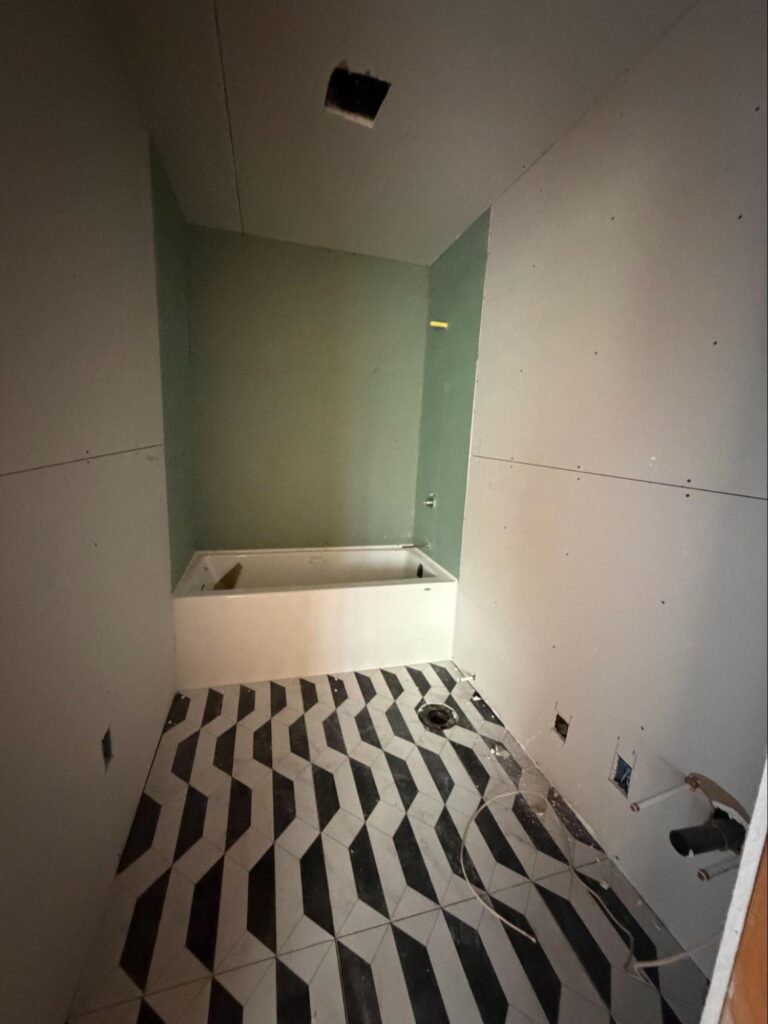
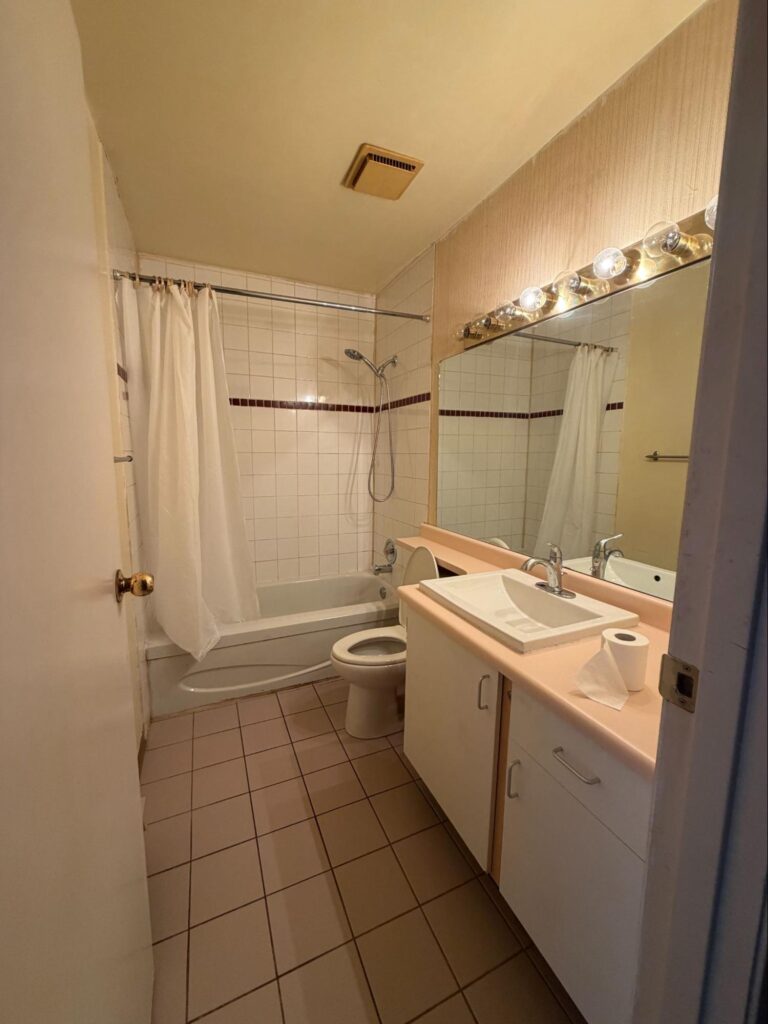
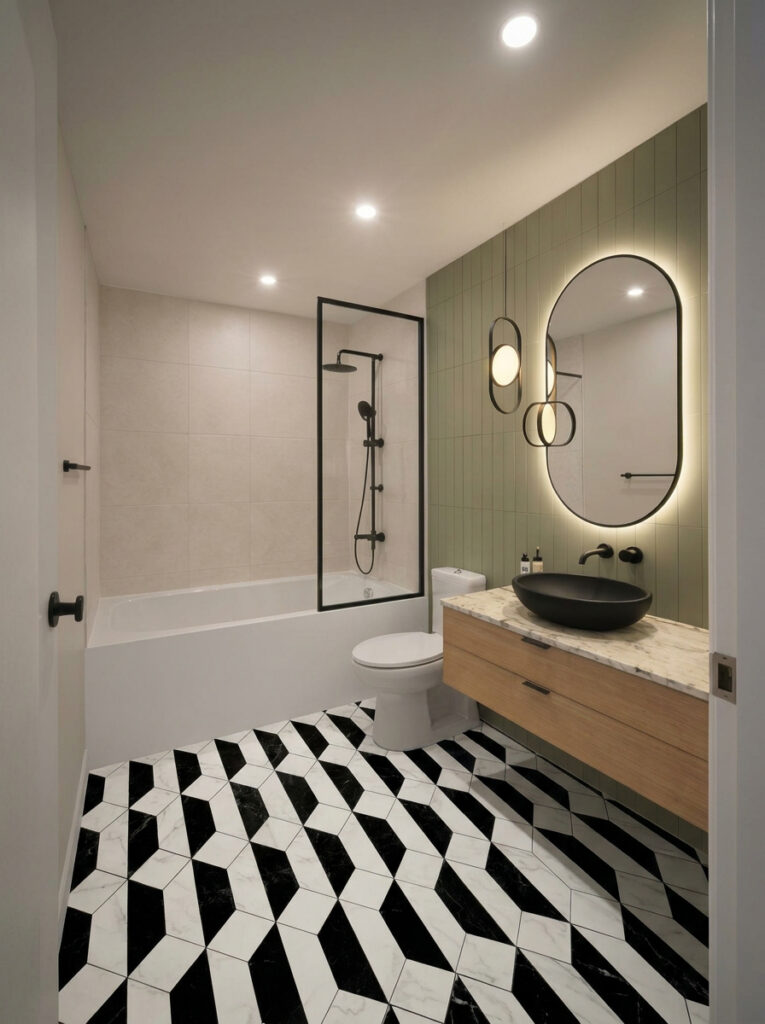
Site in process. Before, during, and design options A and B for clients.
A Necessary Shift in Public Understanding
As cities grow denser and construction becomes more complex, interior design plays an increasingly critical role.
Interior designers are not decorators.
They are not optional.
They are spatial strategists, technical coordinators, and problem-solvers whose decisions shape how buildings function every day.
Understanding this, especially in Canada and North America, is the first step toward better buildings, smarter investments, and spaces that truly work.
References (APA 7th Edition)
- Council for Interior Design Accreditation. (2020). Professional standards 2020. https://www.accredit-id.org/professional-standards
- National Council for Interior Design Qualification. (2023). About NCIDQ and the interior design profession. https://www.cidq.org/about-ncidq
- Interior Designers of Canada. (2022). The value of interior design. https://www.idcanada.org/about-interior-design
- Pile, J. (2007). Interior design (4th ed.). Pearson/Prentice Hall.
- Ching, F. D. K., & Binggeli, C. (2018). Interior design illustrated (4th ed.). Wiley.